

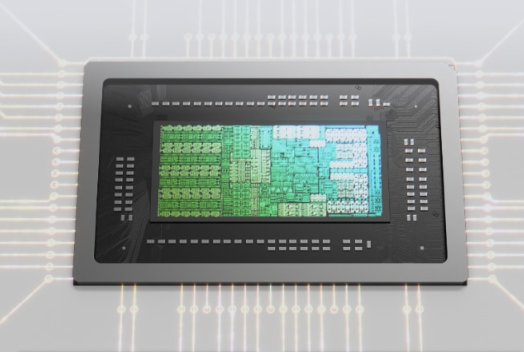
Recently, NVIDIA’s CEO Jensen Huang announced a completely new era of computing technology — the superchip RTX Spark. In this article, we will explore why this chip was created, its performance capabilities, expected pricing, and which laptops will represent this new class of modern technology. Let’s dive in!
What Is It?
The “Green Giant” introduced a powerful chip that, as Jensen Huang explained, is going to reinvent the PC. Modern life increasingly revolves around AI technology, and with this chip, the personal computer can become a supercomputer in your home. It’s not only about raw power and speed, but also about autonomous AI agents that can drastically improve productivity. Huang said: “I could totally imagine some day there is an AI supercomputer in your house, and it’s running all of your agents, it’s running all of your assistants.”
This product is similar to NVIDIA’s DGX Spark platform, but the difference lies in its audience. DGX Spark runs a custom version of Ubuntu Linux, whereas RTX Spark supports Windows 11 OS. The goal is clear: empower Windows PCs to run massive AI models, deliver creative workflows, and support high‑end gaming — all in thin, portable machines.
Why Was It Introduced?
RTX Spark was created with a very clear mission: to redefine personal computing for the AI era. NVIDIA wants Windows computers to run large AI models locally, meaning your laptop can act as a true AI assistant — private, fast, and available 24/7.
It’s also about competition. Apple’s M‑series chips have shown how powerful Arm‑based processors can be in slim laptops. NVIDIA’s answer is Spark, bringing similar efficiency and performance to the Windows ecosystem. The chip accelerates CPU, GPU, and AI agents to guarantee seamless performance across creative apps, gaming, and productivity.
Performance
From the presentation, we learned that RTX Spark is an Arm‑based chip that merges CPU, GPU, and AI acceleration into a single package. Traditional PCs rely heavily on cloud services for advanced AI tasks, but Spark brings those capabilities directly to your device. It can run 120B‑parameter models, enabling advanced personal AI agents.
Because NVIDIA focuses heavily on gaming PCs, the new chip can handle 12K video editing and render 3D scenes exceeding 90GB. The Blackwell RTX GPU with 6,144 CUDA cores and 5th‑generation Tensor Cores dramatically boosts parallel computing and AI performance. CUDA cores accelerate graphics rendering and parallel tasks, while Tensor Cores specialize in matrix math for AI training, inference, and creative workloads. Together, they enable faster gaming, smoother video editing, and more efficient AI model execution. Overall, Spark offers performance similar to a laptop‑focused RTX 5070, but with better energy efficiency.
A 20-core NVIDIA Crace CPU has the same design as the GB10 superchip in the DGX SPARK.
To stand out from other Arm‑based chips, NVIDIA highlighted that RTX Spark supports up to 128GB LPDDR5X unified memory. This means the CPU, GPU, and AI accelerators share the same memory pool, designed for high speed and energy efficiency. Compared to older DDR4/DDR5 desktop RAM, LPDDR5X consumes less power while still delivering very high bandwidth — perfect for thin laptops and compact PCs.
In a Q&A session, NVIDIA’s consumer product marketing lead Mark Aevermann said: “This is the most efficient PC chip ever built,” noting that laptops will feature 14‑ to 16‑inch screens and lightweight designs.
With this information, we can conclude that RTX Spark is a true treasure for gamers, creative professionals (who gain 2× performance boosts in Adobe and Blender), and AI enthusiasts.
Price and Expectation
There is no official price yet, since NVIDIA has only announced the chip. Pricing will likely be revealed closer to the fall launch. What we can expect is that laptops equipped with this chip will be extremely capable, and because of this, expectations are very high.
Compatible Computers
The first devices will arrive this fall. Microsoft is already preparing its flagship Surface Laptop Ultra, while ASUS (ProArt P14, P16), Dell (XPS 16), MSI (Prestige N16 Flip AI), HP (OmniBook X14 Ultra 16), Lenovo (Yoga Pro 9i), and others are also on board. Beyond laptops, NVIDIA plans to introduce mini‑PCs with partners including Acer, ASUS, Dell, Gigabyte, HP, MSI, and Lenovo.
Conclusion
The launch of NVIDIA RTX Spark marks a turning point in personal computing. By merging CPU, GPU, and AI acceleration into one chip, Spark promises to transform how we work, create, and play. Whether you are a gamer chasing high FPS, a designer editing massive video files, or an AI enthusiast running advanced models locally, Spark is poised to deliver — and reshape the future of PCs.
Related Products


